Senate blocks a bill on who pays for data centers’ grid costs
A bill asking state regulators to consider making data centers cover the cost of the power infrastructure built for them fell three votes short in the Senate.
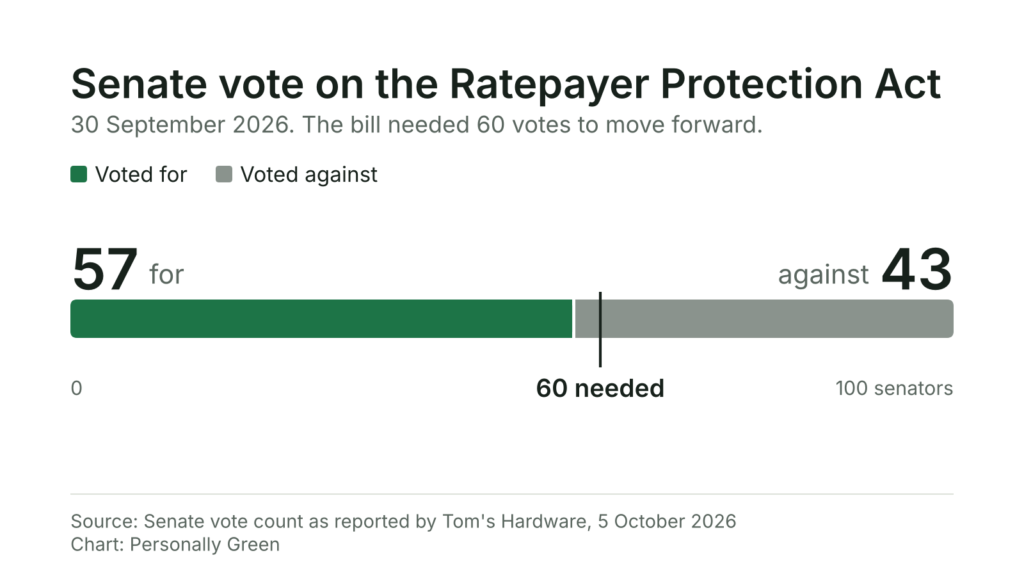
The Senate voted 57 to 43 on September 30 on the Ratepayer Protection Act, three votes short of the 60 it needed to advance. The House had passed the bill two weeks earlier.
The bill, introduced in the Senate by Jon Husted of Ohio, would have set a federal standard directing state utility regulators to consider whether very large electricity users, such as data centers, should pay the added cost of the infrastructure needed to serve them. Husted argued that the country has to build energy infrastructure for AI without passing the cost to families and small businesses.
Opponents, most of them Democrats, said the bill would change little because it only asked regulators to consider the standard and did not require them to adopt it. Some lawmakers have suggested returning to the issue after the November elections with a version that binds regulators.
Why it matters
Both sides in this vote said they wanted the same thing: households should not pay for power lines and plants built for data centers. A data center that supplies its own power takes most of that cost off the table before the argument starts.
Reality check
Nothing changed as a result of this vote. Who pays for grid upgrades is still decided state by state and utility by utility, and a stronger federal bill is only a suggestion so far.
Source Tom's Hardware